Construction & Site Risk
News
Construction Site Security Checklist: Access Control, Public Protection and After-Hours Risk
Construction Site Security Checklist: Access Control, Public Protection and After-Hours Risk
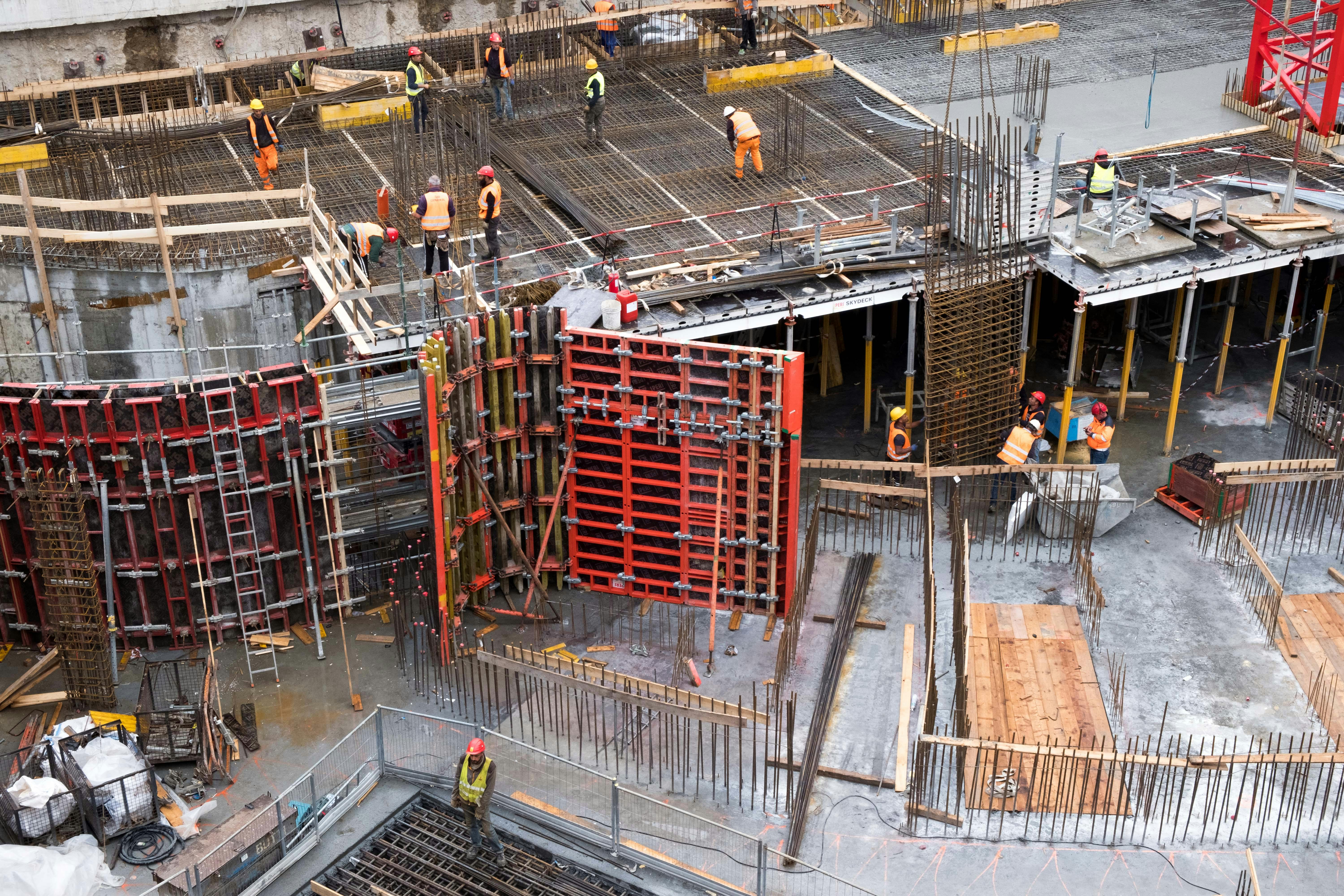
Security on a construction site is wider than most people think
A good construction site security plan is not just there to reduce trespass or protect materials. It also needs to support health and safety, public protection, contractor control and continuity across the programme. Under CDM 2015, principal contractors must plan, manage, monitor and coordinate the construction phase, take account of risks to everyone affected by the work including members of the public and take steps to prevent unauthorised access to the site. They must also ensure workers receive site-specific inductions.
That is why the strongest construction security arrangements are usually the ones that do not treat “security” as a separate add-on. They treat it as part of how the site is controlled day to day. HSE’s public protection guidance and ProtectUK’s physical security guidance both point in the same direction: risk controls should be proportionate to the environment and planned around how the site actually works.
Checklist item 1: Start with the boundary, not the building
If the perimeter is weak, almost every other control becomes harder to rely on.
HSE says site boundaries should be physically defined where necessary by suitable fencing, and that the type of fencing should reflect the nature of the site and its surroundings. It also says that, in populated areas, this will typically mean a two-metre-high small mesh fence or hoarding around the site. HSE is also clear that planning, providing and maintaining the perimeter is a core part of managing public risk.
That makes the first review question very simple: is the boundary actually doing its job, or is it just present? On a live project, gaps, damaged sections, climb points, weak interfaces with existing structures and poorly managed gates can all undermine what looks like a secure perimeter on paper.
Checklist item 2: Decide who is allowed where
Access control on construction sites is often treated as a gate issue. In practice, it is a site-zoning issue.
HSE says the principal contractor must take reasonable steps to prevent unauthorised people accessing the site. It also says authorised people may be allowed onto the whole site or restricted to certain areas, that relevant site rules must be explained and that some authorised visitors may need supervision or an escort while they are on site.
That matters because many construction-site problems are not caused by a total failure of access control. They happen because access is too broad, visitor rules are unclear or temporary changes on site are not reflected in who can enter which areas. The practical question is not only “Can people get in?” but also “Can the wrong people get to the wrong place too easily?”
Checklist item 3: Treat public protection as a live issue
A construction site may sit behind fencing and still create significant risk to people outside it.
HSE’s public protection guidance highlights hazards that can affect the public and visitors, including falling objects, vehicle movements, scaffolding activity, material storage, openings and excavations. It says objects must not be allowed to fall outside the site boundary and points to controls such as toe-boards, brick guards, netting, fans and covered walkways. It also warns that deliveries can create risk if pedestrians are forced into the road.
This is where site security and site safety overlap directly. A secure site is not only one that keeps intruders out. It is one that reduces the chance of members of the public being exposed to construction hazards because access, perimeter controls and delivery arrangements have not been thought through properly.
Checklist item 4: Pay extra attention to scaffolding and incomplete structures
If there is one area where after-hours risk is routinely underestimated, it is access to scaffolding and unfinished buildings.
HSE’s safety alert on unauthorised access to scaffolding says security of the site, including scaffolding and ladders, is vital because falls from height after unauthorised public access frequently involve children and can result in major or fatal injuries. It says access routes may need to be secured by a combination of perimeter fencing, local fencing and ladder removal out of hours, or by using suitable ladder guards to make ladders unclimbable.
HSE also says the level of security needed depends on factors such as proximity to residential areas, schools and public venues, whether the scaffold is at the site boundary, whether the building is occupied and how long the site will be closed for. That makes scaffolding security a site-assessment issue, not something to leave to habit.
Checklist item 5: Make inductions match the actual site
A site induction is not a paperwork exercise. It is one of the clearest chances to reduce confusion, tighten control and make access rules meaningful.
HSE says every site worker must be given a suitable site induction, and that the induction should be site specific and highlight particular risks and control measures. It also says occasional and one-time visitors should receive inductions proportionate to the nature of their visit, with escorted visitors needing awareness of the main hazards and controls relevant to them.
For project teams, the takeaway is straightforward: if the site has changed, the induction content may need to change with it. A generic induction that ignores current traffic routes, restricted areas, scaffold access, temporary works or revised emergency arrangements can weaken both safety and security controls at the same time.
Checklist item 6: Review vehicle movement as part of security
Vehicle control is often treated as an operations problem until something goes wrong.
HSE specifically warns that pedestrians can be struck by vehicles entering or leaving the site, especially where deliveries obstruct pavements and push pedestrians into the road. ProtectUK’s site-security guidance also stresses the importance of securing sites and vehicles and notes that secure sites help prevent vehicles being stolen and potentially used in terrorist attacks.
That means access control should include vehicle logic, not just people logic. Entry points, delivery timing, waiting areas, gate procedures and the handling of unauthorised vehicles all affect how exposed the site becomes during the working day and after hours.
Checklist item 7: Think in layers, not single controls
One fence, one guard or one camera rarely solves the whole problem on a changing construction site.
ProtectUK recommends a layered approach to physical security, sometimes described as defence-in-depth. It says effective physical security is usually achieved by multi-layering a variety of measures and notes the NPSA principles of deter, detect and delay, supported by an effective response plan. It also says that understanding the threats faced by the site is essential, because effective security depends on a proportionate response.
On a construction project, that usually translates into combining controls: perimeter definition, managed gates, visitor rules, scaffolding security, lighting, patrol patterns, CCTV where appropriate and a clear escalation process when something looks wrong. A single visible measure can reassure people, but layered controls are what usually make a site harder to exploit.
Checklist item 8: Reassess when the project changes phase
Construction risk does not stay still. The site that needed one set of controls during groundworks may need a very different arrangement during fit-out, façade works or partial occupation.
HSE says the principal contractor must prepare a written construction phase plan before work begins and then implement, regularly review and revise it to keep it fit for purpose. It also says there must be ongoing arrangements in place for managing health and safety throughout the construction phase.
That is one of the clearest reasons construction security should be reviewed as a live management issue rather than set once at mobilisation. As boundaries change, new trades arrive, scaffold layouts move and the public comes closer to the work, access and security controls can become outdated faster than many teams expect.
A practical pre-start and live-site checklist
Before works begin, and then at defined review points, the key questions are:
Perimeter and boundary
Is the site boundary clearly defined and physically suitable for the location?
In a populated area, is the fencing or hoarding appropriate for public exposure?
Access and authorisation
Who is authorised to enter the site, and are access levels restricted where necessary?
Are visitors inducted, supervised or escorted in proportion to the risks of the visit?
Public interface
Could deliveries, falling objects, scaffolding works, stored materials or excavations affect people outside the site?
Are there controls in place to stop that exposure leaving the boundary?
Scaffolding and after-hours closure
Can ladders, scaffolds or incomplete structures be accessed when the site is closed?
Are ladder guards, ladder removal, local fencing or other denial measures needed?
Vehicles and logistics
Are entry and exit arrangements exposing pedestrians or weakening gate control?
Is there a clear process for unauthorised vehicles or unusual delivery patterns?
Review and change
Has the site changed enough that the original access and protection measures no longer fit?
Has the construction phase plan been updated to reflect that?
Final point
Construction site security is usually strongest when it is treated as part of site control, not as a separate bolt-on. Access, public protection and after-hours risk all sit inside the same operational question: is the site still being managed in a way that reflects its current exposure?
That is the real test. Not whether a control exists, but whether it still fits the site that exists now.
FAQ
Who is responsible for preventing unauthorised access on a construction site?
Under CDM 2015, the principal contractor must take steps to prevent unauthorised access to the site while planning, managing and monitoring the construction phase.
What fencing does HSE expect on a construction site?
HSE says the boundary should be physically defined where necessary by suitable fencing, with the type reflecting the nature of the site and its surroundings. In populated areas, this will typically mean a two-metre-high small mesh fence or hoarding.
Do occasional visitors need a site induction?
Yes, in proportion to the visit. HSE says even those who do not regularly work on the site but visit occasionally or once only should receive an induction proportionate to the nature of the visit.
Why is scaffolding security such a major issue out of hours?
HSE says unauthorised access to scaffolding and incomplete buildings frequently leads to falls from height, often involving children, and that perimeter fencing, local fencing, ladder removal or ladder guards may be needed to reduce that risk.